If you’re a plumber running your own business, you know the job isn’t over when the leak is fixed or the new water heater is installed. The real finish line is getting paid. And nothing slows that down faster than a messy, incomplete invoice.
A plumbing invoice template isn’t just a piece of paper. It’s how you communicate what you did, how much it costs, and when you expect to be paid. The right template makes you look professional, helps you collect faster, and keeps your bookkeeping from turning into a headache. After years of sending invoices and helping other tradespeople set theirs up, I’ve learned what works and what just wastes time.
What exactly is a plumbing invoice template?
It’s a pre-formatted document you fill out for each job. Instead of starting from scratch every time, you have a structure that already includes your business info, a place for the customer’s details, line items for labor and materials, and payment terms. You just plug in the specifics of the job.
Think of it as a reusable framework. You use it every time you finish a service call, whether it’s a simple toilet repair or a full bathroom repipe. The best templates are flexible enough to handle both flat-rate jobs and hourly work with parts.
When do you actually use one?
You hand over a plumbing invoice after the work is done. Sometimes it’s the same day, sometimes you email it later that evening. The key is to send it while the job is still fresh in the customer’s mind. If you wait a week, you risk looking disorganized, and the customer might question the charges.
I’ve seen plumbers use them on-site with a tablet, print them from a phone, or fill them out by hand on a carbon copy pad. The format doesn’t matter as much as the habit of sending one every single time.
Key sections every plumbing invoice needs
A good template isn’t complicated, but it has to cover the basics. Here’s what I include in mine:
- Your business name and contact info. Phone number, email, and physical address if you have one. This seems obvious, but I’ve received invoices from subs where I had to hunt for their number.
- Customer’s name and job address. Especially important if you’re doing work at a rental property or a commercial site.
- Invoice number and date. This keeps you organized and makes it easy to reference later.
- Description of work performed. Be specific. Instead of “fixed sink,” write “replaced kitchen faucet cartridge, cleared P-trap blockage.”
- Parts and materials list. Include the item, quantity, and price. If you mark up parts, show the cost and your markup separately.
- Labor charges. Hourly rate multiplied by hours, or a flat fee for the job.
- Tax, if applicable. Some states don’t charge tax on labor, but you need to know your local rules.
- Total amount due. Big, clear, easy to find.
- Payment terms. “Due upon receipt” is standard for residential work. Net 30 might work for commercial clients.
- Accepted payment methods. List what you take: cash, check, credit card, digital payments.
How to write a plumbing invoice that gets paid fast
Here’s a step-by-step approach I’ve refined over the years. It’s simple but effective.
Step 1: Start with your header
Put your logo at the top if you have one. If not, just your business name in bold. Below that, your contact info. Make it look clean and intentional.
Step 2: Add the customer and job details
Write the customer’s full name and the property address where the work was done. If it’s a commercial job, include the company name and a contact person.
Step 3: List every part and material
Don’t just say “parts.” Break it down. For example:
- 1 – 1/2″ brass ball valve: $18.50
- 2 – 3/4″ copper 90-degree elbows: $4.20
- 1 – roll Teflon tape: $1.50
Customers appreciate transparency. It also covers you if they question the total.
Step 4: Show your labor clearly
If you charge by the hour, list the hourly rate and the total hours. If you use flat-rate pricing, call it “Labor – water heater installation” with a single price. Either way, separate it from parts.
Step 5: Calculate the total
Add parts, labor, and any tax. Put the final number in a box or bold text. Make it impossible to miss.
Step 6: Include payment terms and methods
State clearly when payment is expected. I write “Payment due at time of service” for residential calls. Then list the ways they can pay you. If you charge a fee for credit cards, mention it.
Step 7: Add a thank you note
A simple “Thanks for your business” at the bottom goes a long way. It’s human and leaves a good impression.
Example of a plumbing invoice
Here’s what a completed invoice might look like for a common job. I’ve simplified it, but the structure is solid.
Johnson’s Plumbing
555-123-4567 | johnsonplumb@email.com
123 Main Street, Anytown, USA
Invoice #: 1042
Date: March 15, 2025
Bill to: Sarah Miller
456 Oak Avenue, Anytown, USA
Description of work: Diagnosed and repaired leaking shower valve. Replaced worn cartridge and tested for proper function.
Parts:
1 – Moen shower cartridge (1222): $35.00
1 – Tube plumber’s grease: $4.00
Parts subtotal: $39.00
Labor:
1.5 hours @ $95/hour: $142.50
Total due: $181.50
Payment terms: Due upon receipt.
Accepted payment: Cash, check, Visa, Mastercard, Zelle.
Thank you for your business!
Common mistakes plumbers make on invoices
I’ve seen plenty of invoices over the years, and the same issues keep popping up. Avoid these and you’ll save yourself a lot of follow-up calls.
- Being vague. “Fixed leak” tells the customer nothing. If they have to call you to ask what you did, you’ve already lost time.
- Forgetting the invoice number. Without one, tracking payments and following up on late ones becomes a guessing game.
- Not including payment terms. If you don’t say when it’s due, some customers will assume they can pay whenever they feel like it.
- Mixing personal and business expenses on the same invoice. Keep it clean. Your invoice is a business document, not a receipt for your lunch.
- Sending it late. The longer you wait, the less urgent it feels to the customer. Send it the same day.
Tips for customizing your template
A generic template works, but a tailored one works better. Here are a few tweaks I recommend based on your type of work.
For residential service plumbers: Add a line for “Trip charge” or “Diagnostic fee.” Many plumbers charge a flat fee just to show up, and it should be clearly listed separate from repairs.
For new construction or commercial work: Include a “Progress payment” section if the job spans multiple weeks. You might also need a lien waiver or a place to record a purchase order number.
For emergency calls: Add a line for “After-hours surcharge.” Be upfront about it so there are no surprises.
For plumbers who sell maintenance plans: Include a section to note the next recommended service date. It’s a small touch that helps with repeat business.
You can also adjust the design. Some plumbers I know use a simple one-page layout with a clean font. Others prefer a two-column format with the total on the right. Test a few and see what your customers respond to.
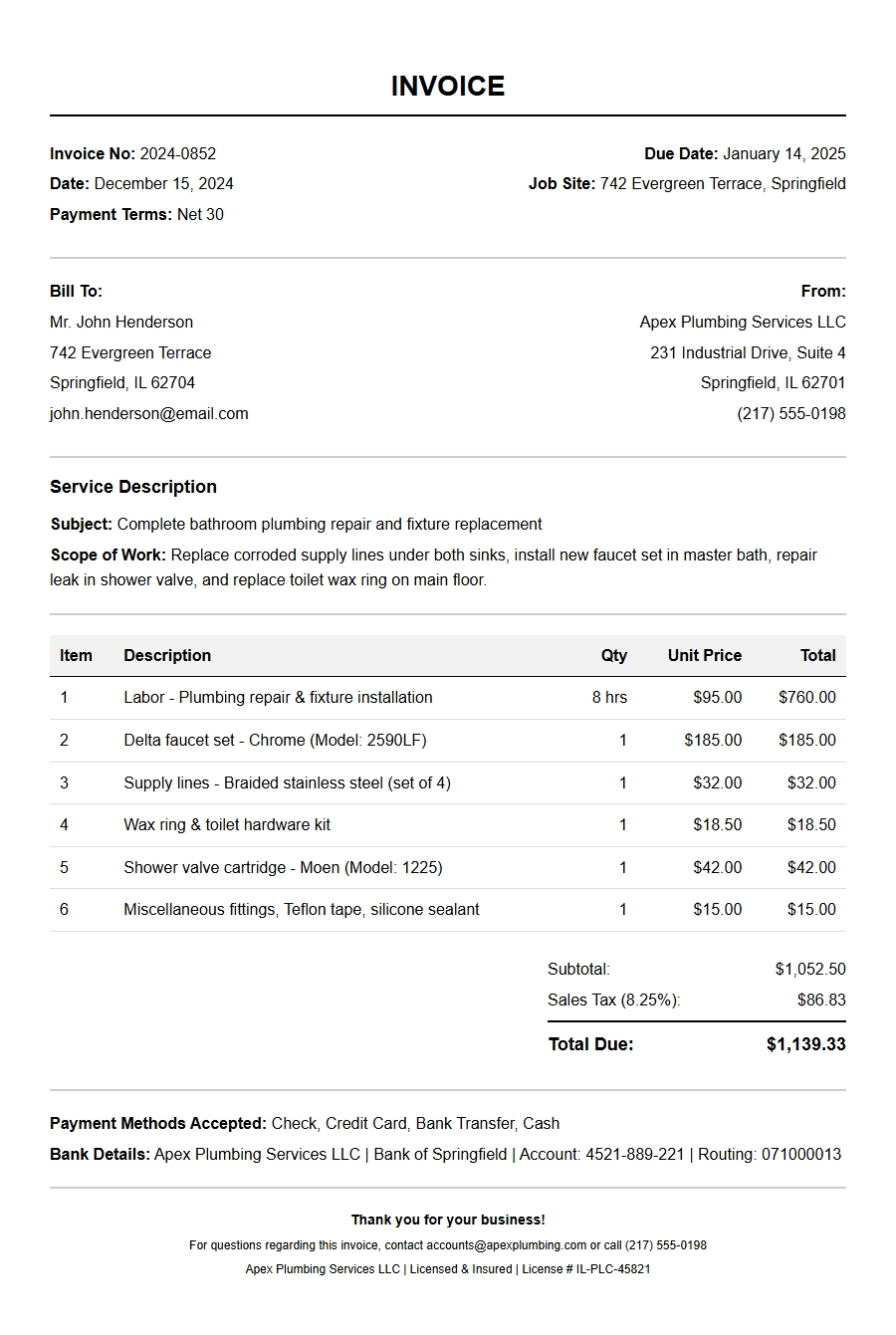
If you’re looking for a solid starting point, here’s a plumbing invoice template that covers all the basics. It’s built to be edited for your specific rates and services.
Other trades have similar needs, and you can adapt ideas from their formats too. A roofing contractor invoice has a similar structure, but with room for material quantities by the square. A tattoo artist invoice focuses more on design time and shop fees, which is a different angle on labor breakdown. Even a bakery invoice template can give you ideas on how to list multiple small items clearly. And a cleaning service invoice is a good example of how to handle recurring clients with flat monthly rates.
A final thought on getting paid
Your invoice is the last thing the customer sees from you. Make it clear, accurate, and professional. A good template saves you time, reduces errors, and helps you get paid without the awkward follow-up texts. Pick one that fits your workflow, customize it for your typical jobs, and use it every time. That habit alone will make your business run smoother.
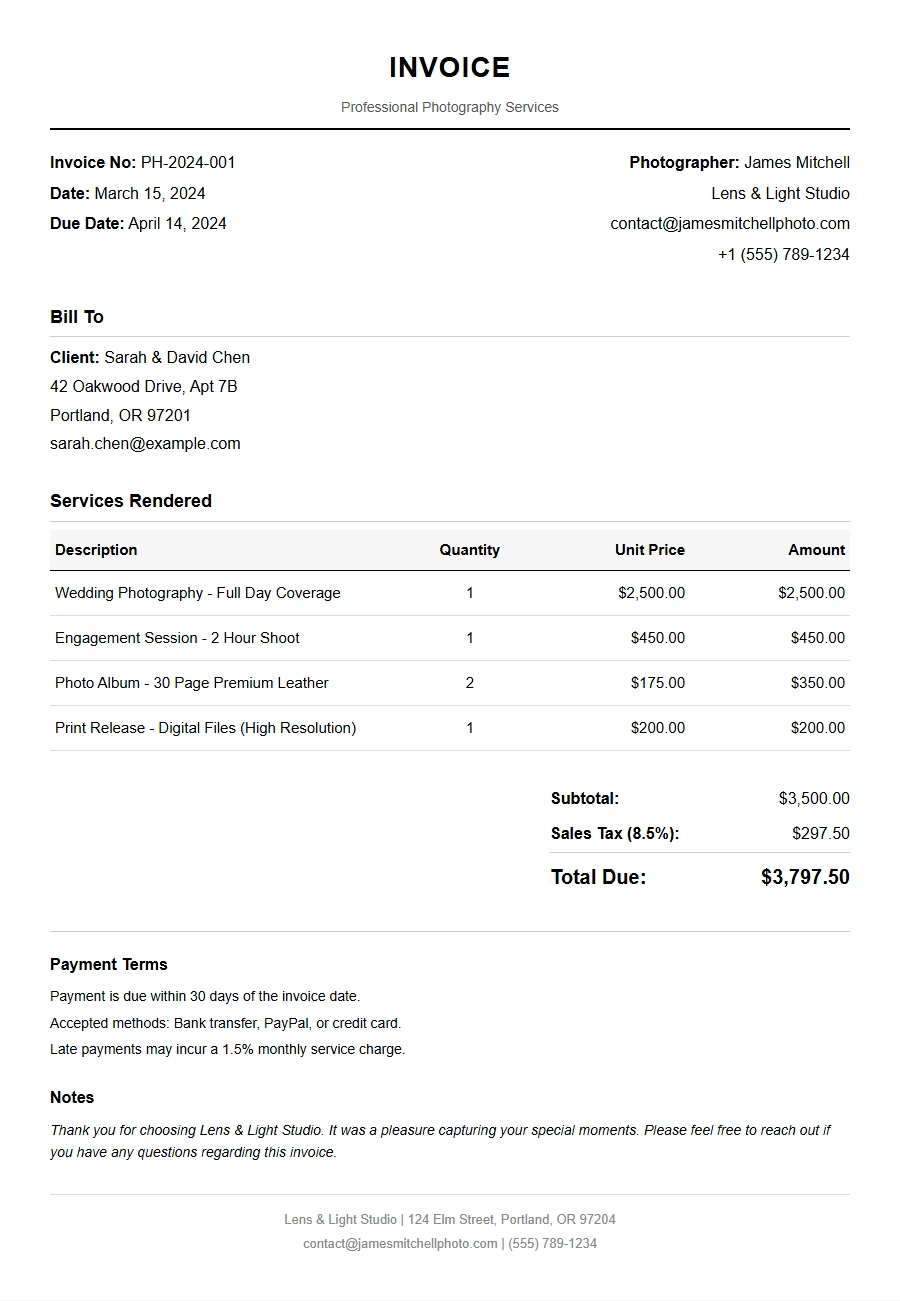 Free Photographer Invoice Template for Professionals
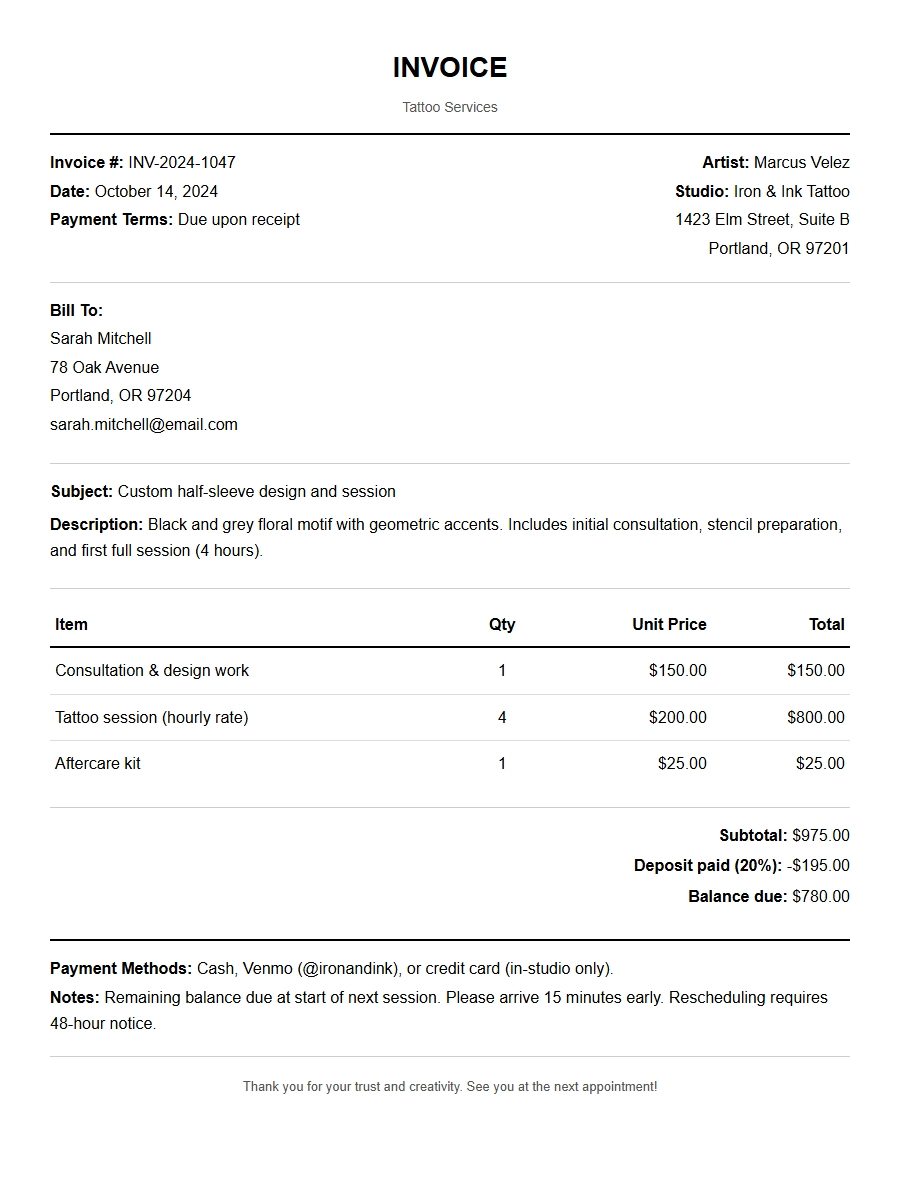 Professional Tattoo Artist Invoice Template
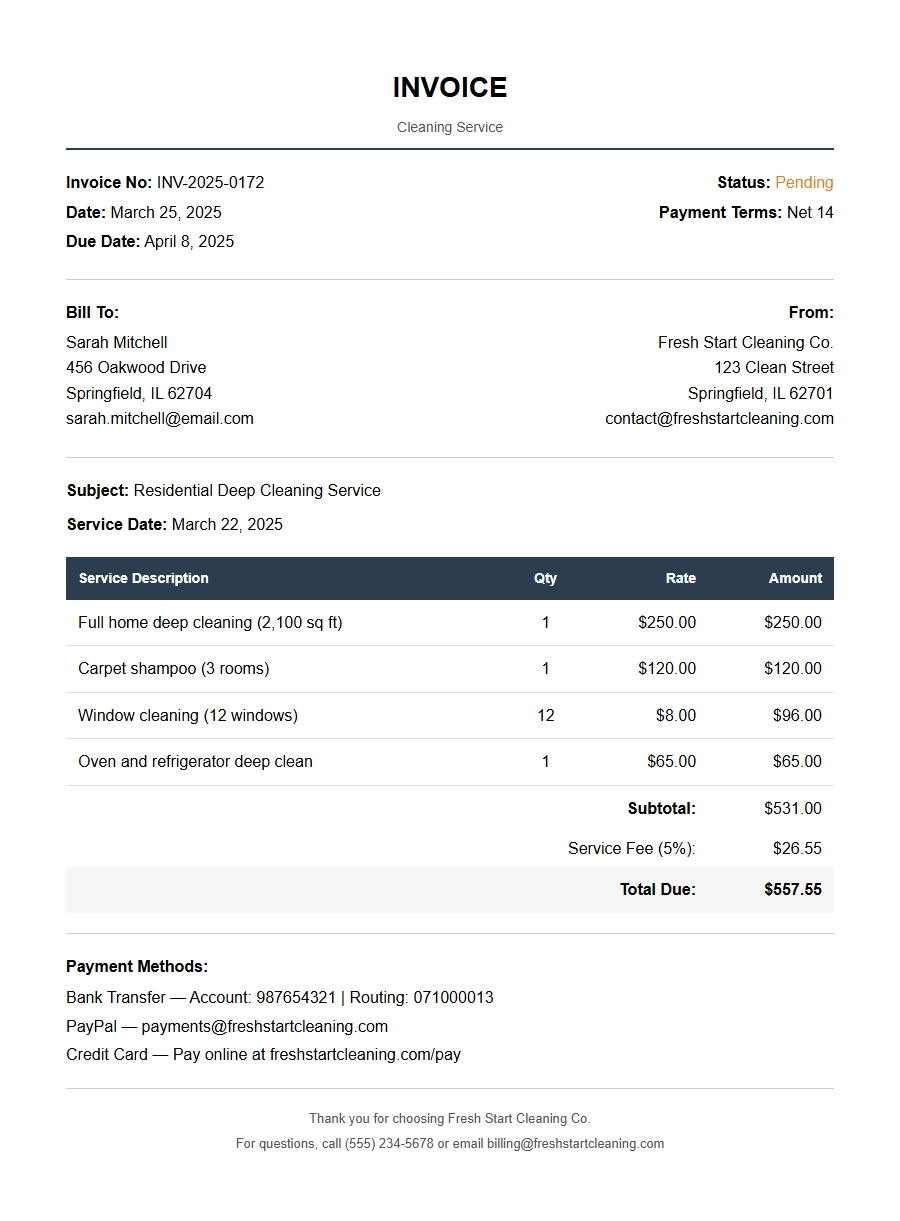 Professional Cleaning Service Invoice Template
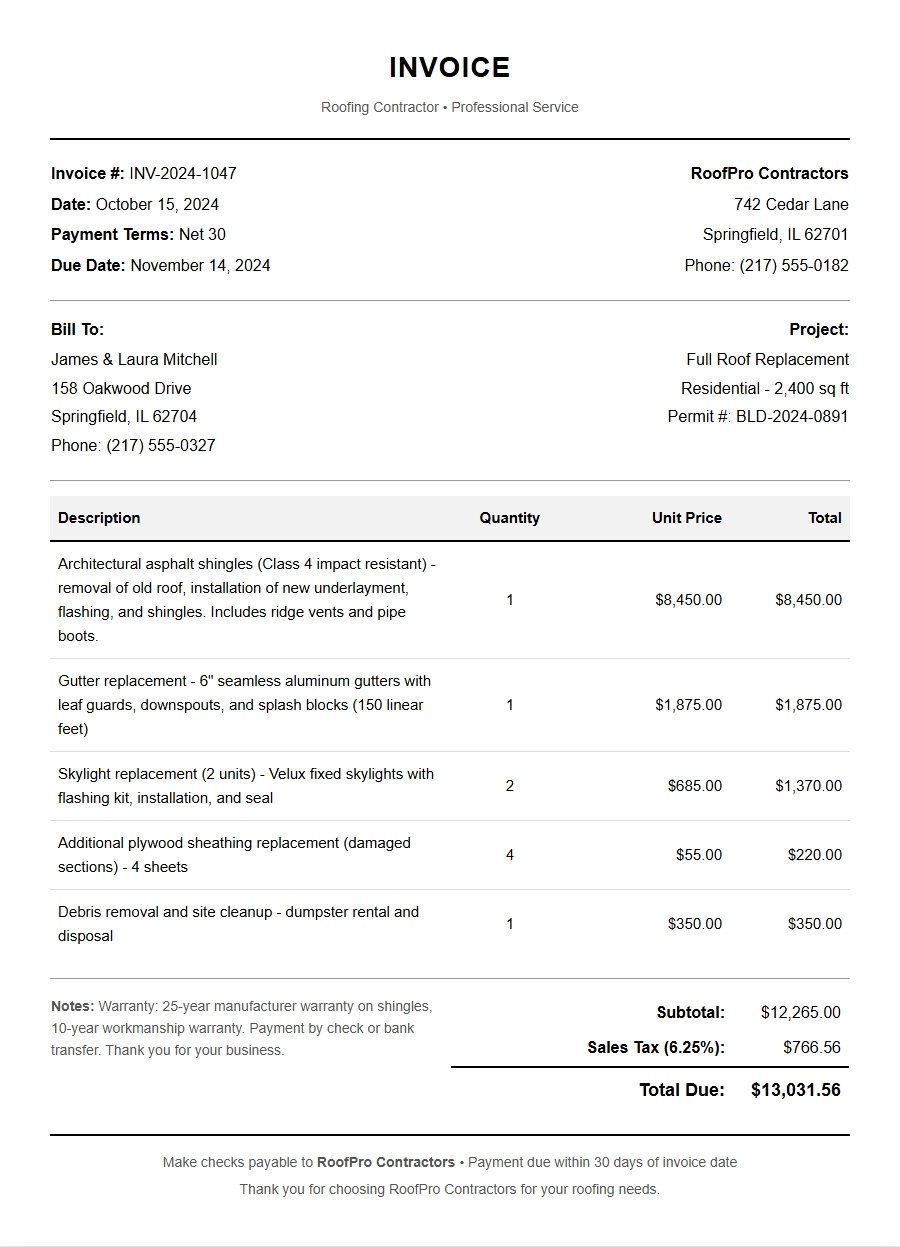 Free Roofing Contractor Invoice Template
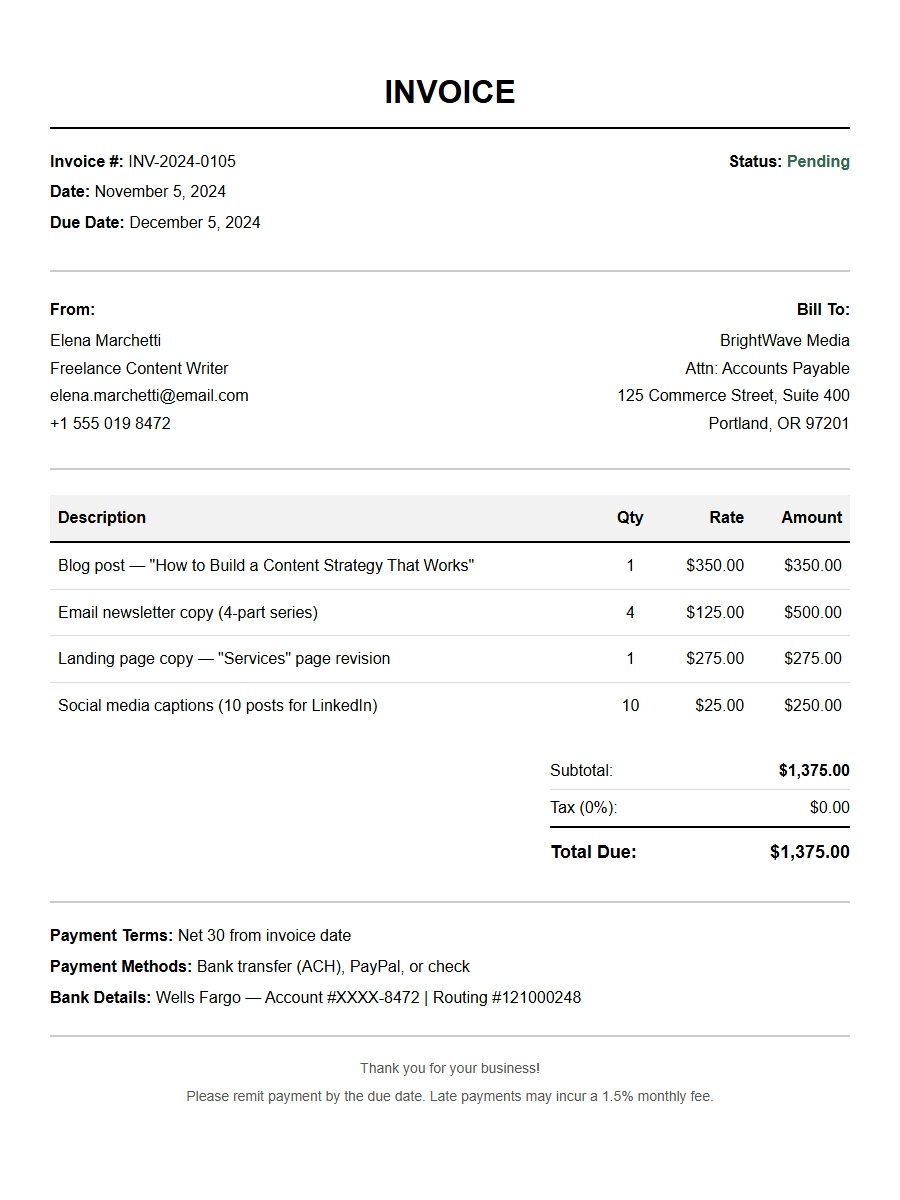 Free Freelance Writer Invoice Template
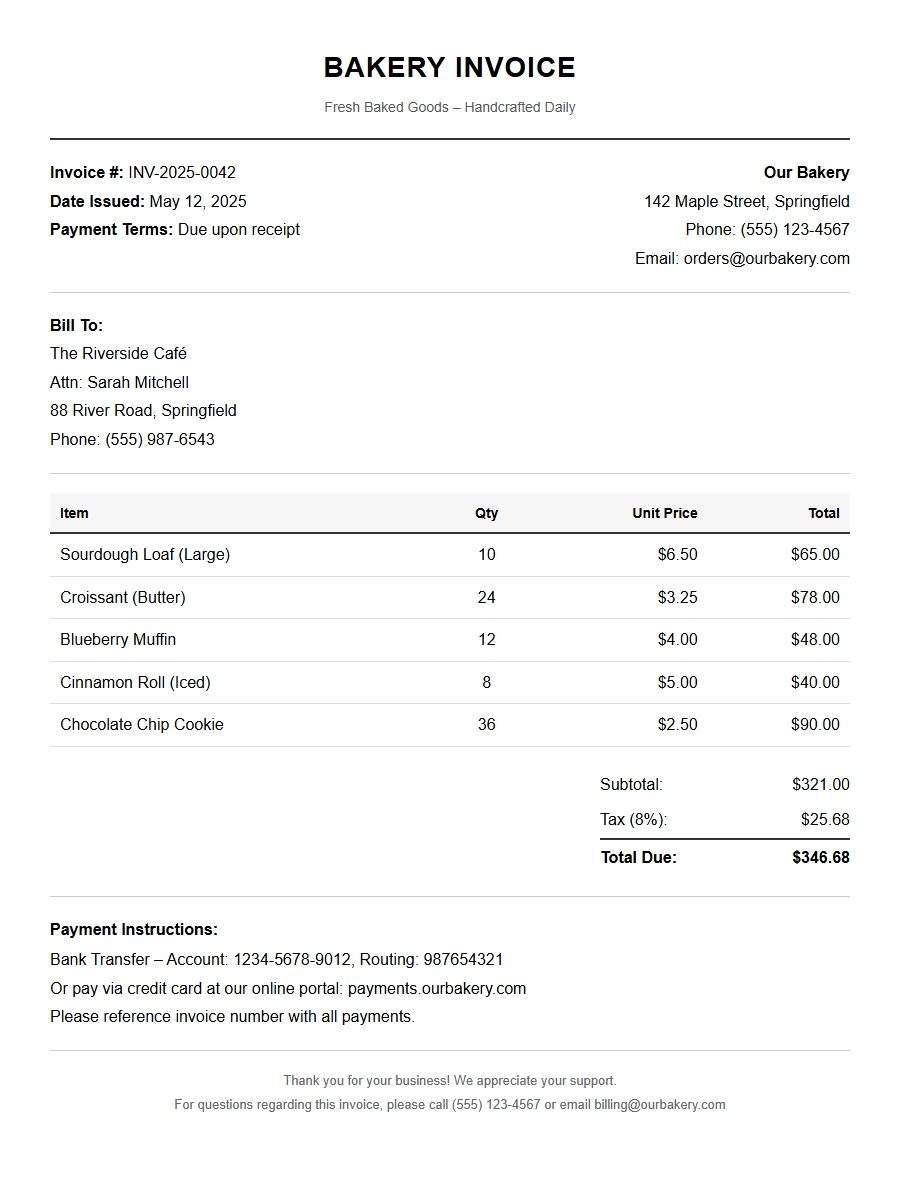 Free Bakery Invoice Template for Your Business